Oh, forgot to say,
there's more factors than that.
For supply and demand to even be a factor,
the actual item will have to be on market,
the companies limit what they actually put on the market for that reason based on past research of past months.
EDIT: Yes Brownoser,
you have,
but I'm just reminding you,
you are a jackass.
Why NOT to legalize marijuana.
Started by: Brownoser | Replies: 112 | Views: 3,671 | Closed
Mar 3, 2010 4:15 AM #552595
Mar 3, 2010 4:19 AM #552597
You guys are impossible. I'm out.
Mar 3, 2010 4:19 AM #552598
Quote from Brownoser
did you even read that wikipedia article?
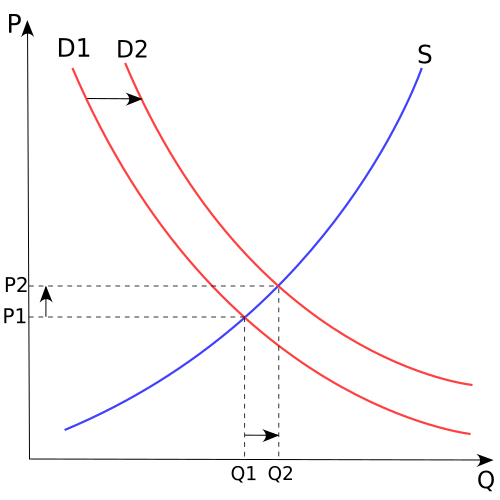
"as price decreases, consumers will buy more of the good"
contrasting that statement, which is what i had written, as price increases, consumers will buy less of the good. Or to rephrase it the way i wrote it, if less people are willing to buy a certain product, the product will be more expensive
Mar 3, 2010 4:26 AM #552602
Quote from BrownoserYou guys are impossible. I'm out.
What?
How are we impossible,
I've been trying to accept your views,
trying to take in you're argument as a possibility,
but that's just is,
your argument is so filled with bullshit that there's no way to even accept part of it as true,
I doubt you're even trying to accept our input on the subject as valid.
Mar 3, 2010 4:27 AM #552604
that and you don't even know what supply and demand is. it's almost as if you googled the phrase and posted it here for your argument hoping it might have something conflicting my statement
Mar 3, 2010 4:36 AM #552611
Dammit,
now I don't feel like this debate is even finished.
I got really heated at you and you leaved,
bastard,
now there won't be a goddamn winner.
now I don't feel like this debate is even finished.
I got really heated at you and you leaved,
bastard,
now there won't be a goddamn winner.
Mar 3, 2010 4:38 AM #552613
there already was the minute this thread was made
Mar 3, 2010 4:43 AM #552617
Little bitch runs away from this thread...:/
Mar 3, 2010 4:54 AM #552621
i could never smoke weed...anyway brownoser, are you a dealer, customer, or grower?
Mar 3, 2010 9:20 AM #552671
Quote from Sonic Youthi could never smoke weed...anyway brownoser, are you a dealer, customer, or grower?
read his post you stupid shit, he says he's a dealer and a user. if you're going to post in the debate section, you need to at least take the time to read THE FIRST POST at least, come on.
Mar 3, 2010 12:52 PM #552701
the **** just happened? I log on in the morning and find an 85 post thread has materialised.
Since I don't have the energy to read through everything, the only thing I can reply to is the OP. You say that the dealer pays the indirect tax to the government when he buys goods with weed profits. You conveniently leave out the fact that a legal dealer will do exactly the same thing, plus pay the tax on the weed. He will have slightly less profit to spend in the first place, but let's examine a numerical example (with made up numbers because I don't know the average profit on weed or the tax rates wherever you are):
Illegal:
Dealer makes £100 revenue. £80 of this is profit. He buys £80 worth of goods. VAT of 25%; government gets £20.
Legal:
Dealer makes £100 revenue. VAT of 25%; government already has £25. Dealer had obviously spent £20 buying in the weed too, so only £55 profit. That £55 gets spent, giving the government another £14. Government now has nearly double their previous tax revenue.
You also overlooked the fact that the dealer probably just made £300 revenue because the trade is now legal so more people will buy it. Sure, the dealers won't be the same people as before - they will have gone on to sell crack and the new dealers will be chemists - but the economic impact is identical.
Since I don't have the energy to read through everything, the only thing I can reply to is the OP. You say that the dealer pays the indirect tax to the government when he buys goods with weed profits. You conveniently leave out the fact that a legal dealer will do exactly the same thing, plus pay the tax on the weed. He will have slightly less profit to spend in the first place, but let's examine a numerical example (with made up numbers because I don't know the average profit on weed or the tax rates wherever you are):
Illegal:
Dealer makes £100 revenue. £80 of this is profit. He buys £80 worth of goods. VAT of 25%; government gets £20.
Legal:
Dealer makes £100 revenue. VAT of 25%; government already has £25. Dealer had obviously spent £20 buying in the weed too, so only £55 profit. That £55 gets spent, giving the government another £14. Government now has nearly double their previous tax revenue.
You also overlooked the fact that the dealer probably just made £300 revenue because the trade is now legal so more people will buy it. Sure, the dealers won't be the same people as before - they will have gone on to sell crack and the new dealers will be chemists - but the economic impact is identical.
Mar 3, 2010 2:50 PM #552710
There's no point, Zed. I just finished reading the thread, the OP is one of those "I thought this up. It has to be right." debaters. Even though his argument is flawed, he won't accept it.
Mar 3, 2010 4:04 PM #552722
I hope he comes back. I just read through all this. Got me a lovely little average revenue/marginal cost diagram sitting here showing a low price elasticity of demand and high average unit cost which explains the inflated price of medicinal marijuana and everything. It feels unloved :(
Mar 3, 2010 4:24 PM #552723
Here, I'll post for him,
you're wrong, you're diagram is wrong, I'm right because I'm a cool drug dealer.
you're wrong, you're diagram is wrong, I'm right because I'm a cool drug dealer.
Mar 3, 2010 4:59 PM #552727
Oh snap. You did not just insult my beautiful graph.

It's been too long. I love these graphs. I should draw them more often. Right then.
MR - "marginal revenue". It is the extra revenue gained for producing one extra unit.
AR - "average revenue". It is the total revenue divided by the total output.
MC - "marginal cost". It is the additional cost of producing one extra unit.
ATC - "average total cost". It is the total cost of production divided by the total volume produced.
In the first diagram, the producer is supplying only medicinal marijuana. As such, demand is limited but price inelastic - that is to say that a change in price will not have a large effect on demand because it is a necessity for the people that use it. This is shown on the diagram by a steep gradient in the average revenue curve (which equates to the demand curve).
At the same time, a large amount of the total cost is the fixed cost - rents and heating bills, etc, which will not, in the short term, vary with output. The marginal cost - essentially the cost of getting one joint - starts off relatively low and has initial economies of scale (decreasing long-run average unit costs with increased production) because it doesn't cost twice as much to grow two plants as it does to grow one - same gardener can do both, for instance. It then rises sharply, however, because there is no easy way to instantly start to produce massive amounts. The ATC curve slopes down until it meets the MC curve because when MC>ATC it is constantly dragging ATC down.
The point of profit maximisation for any company is at MC=MR, because before that point each additional unit brings more additional revenue than it brings additional cost, and afterwards vice versa. Therefore, p1 (which on most graphs would be q1, but I guess this just shows how rusty I am) is the point of production for the firm. Since the demand curve = AR = price, the price is set at q1. The cost for the firm of producing at this point is equal to the average total cost multiplied by production (this is self evident - it's just total cost divided by quantity and then multiplied by quantity), the firm's costs are equal to q2Bp10, and their revenue, for the same reason, is q1Ap10. This means that profits are q1ABq2.
Now we move on to the second graph, where cannabis is legalised. Now there is a vast increase in demand, although the medicinal users are still there at the top end meaning the AR and MR curves start at the same point. The demand is more price elastic than before because people no longer all need the drug. Therefore, the curves have a shallower gradient.
The economies of scale last for longer now, because so much more is available at short notice - there will probably be a couple of central wholesalers holding tonnes of the stuff. This is shown by the MC curve staying lower for longer (not as smoothly as I would have liked because the curve tool is uncooperative).
The new point of profit maximisation occurs at p2, with price being q3 and costs sitting at q4. This is an obvious drop in price for the consumers, and profits have gone to p3CDp4 which is an increase for the company. Since a greater quantity is sold the government is taking more money too (factored in to both graphs already as part of the marginal cost). The only people who lose out are those who were previously supplying the consumers who are now buying legally. Therefore, from an economic perspective, legalising marijuana is beneficial to almost everyone, and even the dealers are likely to get some free rider benefit off the government's increased revenue.
tl;dr - I win, biatch.
I don't even care if he was trolling. I enjoyed every minute of that.
It's been too long. I love these graphs. I should draw them more often. Right then.
MR - "marginal revenue". It is the extra revenue gained for producing one extra unit.
AR - "average revenue". It is the total revenue divided by the total output.
MC - "marginal cost". It is the additional cost of producing one extra unit.
ATC - "average total cost". It is the total cost of production divided by the total volume produced.
In the first diagram, the producer is supplying only medicinal marijuana. As such, demand is limited but price inelastic - that is to say that a change in price will not have a large effect on demand because it is a necessity for the people that use it. This is shown on the diagram by a steep gradient in the average revenue curve (which equates to the demand curve).
At the same time, a large amount of the total cost is the fixed cost - rents and heating bills, etc, which will not, in the short term, vary with output. The marginal cost - essentially the cost of getting one joint - starts off relatively low and has initial economies of scale (decreasing long-run average unit costs with increased production) because it doesn't cost twice as much to grow two plants as it does to grow one - same gardener can do both, for instance. It then rises sharply, however, because there is no easy way to instantly start to produce massive amounts. The ATC curve slopes down until it meets the MC curve because when MC>ATC it is constantly dragging ATC down.
The point of profit maximisation for any company is at MC=MR, because before that point each additional unit brings more additional revenue than it brings additional cost, and afterwards vice versa. Therefore, p1 (which on most graphs would be q1, but I guess this just shows how rusty I am) is the point of production for the firm. Since the demand curve = AR = price, the price is set at q1. The cost for the firm of producing at this point is equal to the average total cost multiplied by production (this is self evident - it's just total cost divided by quantity and then multiplied by quantity), the firm's costs are equal to q2Bp10, and their revenue, for the same reason, is q1Ap10. This means that profits are q1ABq2.
Now we move on to the second graph, where cannabis is legalised. Now there is a vast increase in demand, although the medicinal users are still there at the top end meaning the AR and MR curves start at the same point. The demand is more price elastic than before because people no longer all need the drug. Therefore, the curves have a shallower gradient.
The economies of scale last for longer now, because so much more is available at short notice - there will probably be a couple of central wholesalers holding tonnes of the stuff. This is shown by the MC curve staying lower for longer (not as smoothly as I would have liked because the curve tool is uncooperative).
The new point of profit maximisation occurs at p2, with price being q3 and costs sitting at q4. This is an obvious drop in price for the consumers, and profits have gone to p3CDp4 which is an increase for the company. Since a greater quantity is sold the government is taking more money too (factored in to both graphs already as part of the marginal cost). The only people who lose out are those who were previously supplying the consumers who are now buying legally. Therefore, from an economic perspective, legalising marijuana is beneficial to almost everyone, and even the dealers are likely to get some free rider benefit off the government's increased revenue.
tl;dr - I win, biatch.
I don't even care if he was trolling. I enjoyed every minute of that.